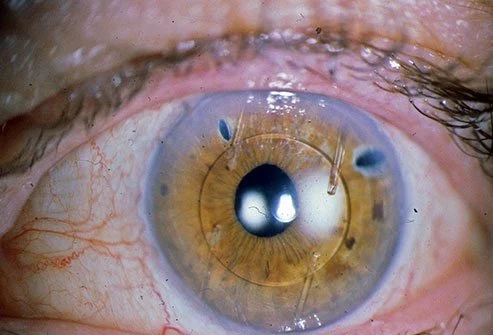
Intraocular lens (IOL) surgery, commonly associated with cataract surgery, involves replacing the eye’s natural lens with an artificial lens. The natural lens becomes cloudy in cataracts, leading to vision problems, and the IOL restores clarity and focus.
IOLs come in different types, including monofocal, multifocal, and toric lenses, which cater to various vision correction needs. The procedure is quick, with minimal downtime, and helps improve vision significantly.
Key steps in IOL surgery:
Anesthesia: Local anesthesia is typically used.
Lens Removal: The surgeon removes the cloudy natural lens, often using ultrasound energy (phacoemulsification).
Lens Replacement: An artificial IOL is implanted in the same location.
When do you need to see a doctor?
IOL surgeries can be done for two main conditions – cataracts and refractive errors. People who have undergone a cataract surgery or are facing issues in vision because of a cataract should consult their doctors for a possible surgery and an IOL implant.
On the other hand, people who have farsightedness (presbyopia) are also advised to undergo refractive lens exchange surgery, but this should only be done after consulting an ophthalmologist near you.
In other cases, a phakic IOL surgery can be prescribed to people with myopia or hyperopia.
What are the benefits of IOL surgery?
Improved, clear vision – helps improve overall confidence and self-esteem
Less reliance on glasses – specifically suited for people with presbyopia
Replaces severely damaged lenses with new ones and helps restore vision and prevent blindness
Different types of IOL surgeries can be customized to suit specific patient needs
Permanent fix for anyone with vision issues due to cataracts, refractive errors and astigmatism
What are the risks of IOL surgery?
Increased intraocular pressure that lasts for several hours after any IOL surgery due to administration of a jelly-like viscoelastic substance to help our eyes accommodate the IOL implanted; this may increase risks of glaucoma in some patients
Corneal swelling or oedema in some patients
Dislocation of the lens due to surgical errors
Retinal detachment where the layer of nerve cells gets detached from the back of the eye, leading to vision loss if not treated on time; a retina specialist is involved in such cases
Power miscalculation while implanting IOLs can lead to over or under-correction and leave the patient dissatisfied with the whole process
What are the different types of IOL Surgeries?
Depending on the nature of IOLs used in any surgery, they can be divided into three main categories:
Surgeries involving monofocal IOLs which have one focusing distance and are suggested to people to fix their distant vision. They are prescribed spectacles for near vision if needed.
Surgeries involving multifocal IOLs which have multiple powers set for adjusting to different distances. These lenses can be used as replacements for bifocal or progressive glasses but may also take more time for the brain to adjust to the vision and cause halos or glares around objects.
Surgeries involving accommodative IOL implants which can accommodate as per the shape of the eye and can help eliminate the need for reading glasses completely. They can be used for both near and distant focus.
Surgeries involving toric IOLs take care of astigmatism, which is nothing but refractive error caused by abnormal curvature of the cornea or the lens.